Monedas y Memoria: Inside Lima's Last-Stand Gaming Cafés Where Arcade Culture Never Died
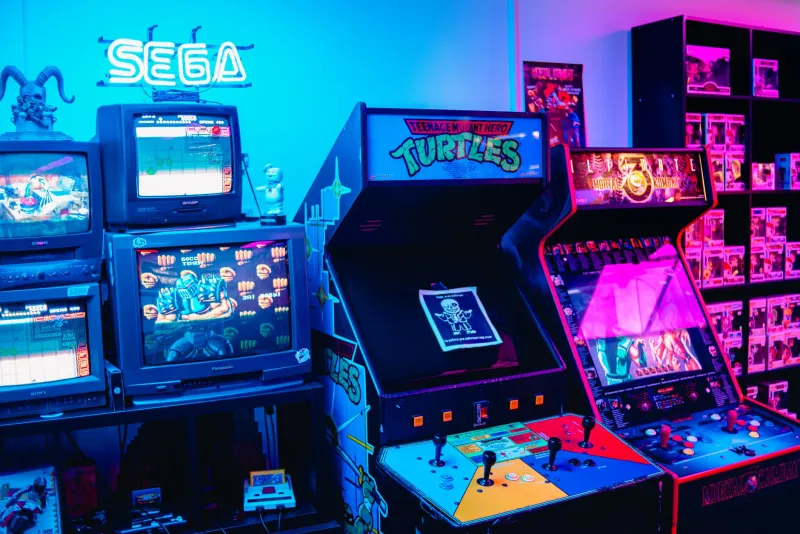
There's a particular smell you don't forget. Stale soda, electrical heat from old CRT monitors, the faint burn of a joystick spring that's been yanked too hard for too many years. Walk into the right corner of Lima — maybe somewhere off Avenida Grau, maybe tucked behind a market in Breña — and that smell hits you before you even find the door. Inside, someone is losing their mind over a missed combo in The King of Fighters '98. Someone else is watching, arms crossed, already calculating the counter.
This is not nostalgia tourism. This is Tuesday.
While mainstream gaming culture sprinted toward subscription services, battle passes, and $70 digital-only releases, a loose but deeply committed underground in Lima kept its quarters on the cabinet. And right now, that underground is getting noticed — not just by locals, but by collectors, competitive players, and gaming documentarians flying in from the US, Japan, and Europe specifically to see what Peru preserved that everyone else threw away.
The Cafés That Refused to Evolve (And Why That Was Genius)
Call them cabinas, call them salas de juego, call them whatever you want — the regulars just call them home. These spaces evolved from the early 2000s internet café boom that swept through Latin America, but where most converted to PC gaming stations and FIFA tournaments, a handful of Lima spots doubled down on original arcade hardware. Some owners invested in custom-modded cabinets running JAMMA boards loaded with fighting game libraries. Others just never got rid of the machines they bought in the '90s and kept repairing them with whatever parts they could source.
Rodrigo Huanca, who has run a two-room gaming spot in the La Victoria district for over fifteen years, puts it plainly: "The machines have a personality that a screen and a controller can't replicate. When you put your hands on a real stick and button layout, your body remembers something. People come back for that memory."
Huanca's place runs six original Neo Geo MVS cabinets alongside a pair of modded Taito Vewlix-style units loaded with everything from Street Fighter III: Third Strike to obscure SNK titles that never saw wide Western release. On weekend evenings, the wait for a machine can stretch to forty minutes. Nobody leaves.
The Hardware Is the Point
For the uninitiated, it might seem like splitting hairs — why does it matter whether you play Garou: Mark of the Wolves on original arcade hardware versus a modern emulator on a high-end PC? Ask anyone in these rooms and you'll get a lecture.
Input latency. Stick tension. The weight of a button press on a genuine Sanwa or Seimitsu component versus a knockoff. The way a CRT screen renders sprites with a softness that an LCD simply doesn't reproduce. These aren't abstract preferences — for competitive players, they're the difference between landing a frame-perfect reversal and eating a combo for the rest of the round.
Carlos "Chimba" Espinoza, a Lima-based fighting game competitor who has placed in regional tournaments across South America, describes the café circuit as a form of training that online ranked modes can't replicate. "Playing online, you're playing against a connection. Playing here, you're playing against a person. You can see their hands. You can feel the pressure. That changes everything about how you develop as a player."
Chimba travels between three or four cafés on a rotating basis, partly to keep his game sharp and partly because each spot has its own cabinet quirks — a slightly stiffer gate on one joystick, a button with a longer throw on another — that he treats like different terrain to master.
International Eyes on Lima's Scene
Word about Lima's arcade underground has been spreading through niche corners of the internet for a few years now. Fighting game forums, retro hardware collector communities, and YouTube channels dedicated to arcade preservation have all started pointing toward Peru as one of the last places on Earth where you can walk into a room, drop the equivalent of a few US cents, and play on hardware that the rest of the world has largely scrapped or museumified.
Marcus Teel, a gaming documentarian based out of Los Angeles who has spent time filming in Lima's café scene, describes his first visit as disorienting in the best way. "I've been to gaming events all over — EVO, retro expos in Tokyo, barcades across the US. Nothing prepared me for walking into a spot in Lima at ten at night and seeing twenty people absolutely locked in on machines I'd only ever seen behind glass in a museum. These aren't artifacts here. They're still the main event."
Teel is currently in post-production on a short documentary that follows three Lima café regulars across a month of local tournament play. He's been open about the fact that the US market has very little context for what Peru's scene has maintained. "People think arcade culture died. Lima is proof that it just relocated."
Counter-Culture With Calluses
There's an ideological edge to what's happening in these cafés that goes beyond nostalgia. Many of the regulars and owners frame their commitment to physical arcade hardware as a deliberate stance against the direction mainstream gaming has taken — the always-online requirements, the delisted titles, the games that become unplayable the moment a server shuts down.
"In twenty years, nobody is going to be able to play half the games releasing right now because the servers will be gone," says Valeria Quispe, a regular at a café in Miraflores who started coming with her older brother as a kid and never stopped. "This cabinet has been working for thirty years. It will work for thirty more if we take care of it. Can you say that about any game you bought digitally last year?"
That argument resonates beyond Lima. Preservation communities in the US have been raising similar alarms for years, but the conversation there tends to stay theoretical. In Lima's cafés, the counter-argument is built into the furniture.
Why This Matters Now
The timing of international attention on Lima's arcade scene isn't accidental. As major gaming companies accelerate away from physical media and legacy hardware support, the appetite for spaces that still treat old games as living culture — not museum pieces — has grown sharply. Lima's cafés didn't plan to become a pilgrimage destination. They just kept showing up.
For the players who've been here all along, the outside attention is flattering but secondary. The real draw is the same as it's always been: a room full of people who care about the same games you do, hardware that demands your full respect, and the unambiguous verdict of a match played in person with no lag, no excuses, and no rage-quits.
The monedas keep dropping. The cabinets keep running. Lima keeps playing.