Ghost Cartridges: Los Hackers Peruanos Que Están Inventando Juegos de NES Que Nunca Existieron
Picture this: you're digging through a bin at a retro game swap meet in Los Angeles, somewhere between a beat-up copy of Contra and a water-damaged Duck Tales manual, and you pull out a cartridge you've never seen before. The label shows a warrior in a feathered headdress standing against a pixelated Andean skyline. The title reads Wari: Guardián del Sol. You've never heard of it. Neither has anyone on Reddit. Neither has the entire documented history of NES publishing.
That's because it didn't come from Nintendo. It came from Lima.
The Workshop Behind the Mystery
Tucked into a neighborhood most tourists never find, a loosely connected network of Peruvian programmers, pixel artists, and hardware tinkerers has been quietly building what they call juegos fantasma — ghost games. These aren't pirated copies of existing titles or simple ROM hacks that slap a new skin on Super Mario Bros. They're original games, built from scratch in 6502 assembly language, the same low-level code that powered the original Nintendo Entertainment System back when Reagan was in the White House.
The people doing this work aren't necessarily professional game developers. Some are software engineers who spend their weekdays writing code for local startups. Others are art school graduates obsessed with the visual grammar of 8-bit sprites. A few are just dedicated hobbyists who taught themselves assembly by reverse-engineering cartridges they bought at used electronics markets in downtown Lima.
What ties them together is a shared obsession: they want to see Peru inside the games they grew up loving, and they're not waiting for a publisher to make that happen.
What These Games Actually Look Like
The titles circulating in collector circles right now cover a surprisingly wide range of Peruvian subject matter. One game follows a huaquero — a grave-robber archetype pulled straight from Peruvian folklore — navigating trap-filled tombs inspired by the real archaeological sites of Chan Chan and Chavín de Huántar. Another is a side-scrolling beat-em-up set in a fictionalized version of 1980s Lima, where the street art, the combi buses, and even the chicha music posters plastered on the walls are rendered in meticulous 8-bit detail.
There's also a puzzle platformer built around Andean cosmology — the three worlds of Hanan Pacha, Kay Pacha, and Ukhu Pacha — where the mechanics actually change depending on which realm the player occupies. The developer behind that one, who goes by the handle Amaru64, told a Peruvian tech blog last year that designing those rule shifts took months of studying pre-Columbian philosophy before a single line of code got written.
The pixel art across these projects is genuinely impressive. Textiles that echo Wari and Tiwanaku geometric patterns appear as background elements. Character designs pull from Moche ceramic iconography. The color palettes are constrained to what the original NES hardware could actually display — no cheating, no modern shortcuts.
How They End Up in American Hands
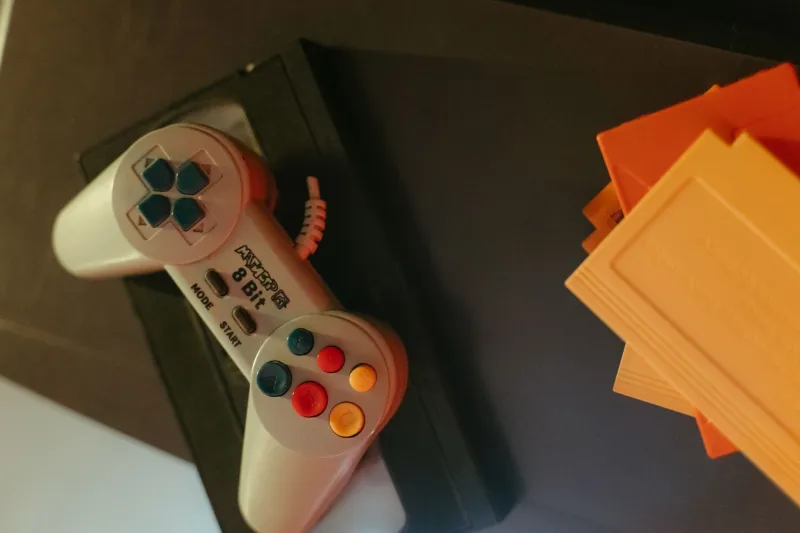
Here's where the story gets interesting for US collectors. Some of these games exist only as ROM files, distributed freely through underground forums and Discord servers. But a growing number are being pressed onto actual cartridges — sometimes using salvaged NES shells, sometimes using newly manufactured boards — and those physical copies are finding their way north.
The pipeline is informal. A collector in Miami picks one up from a Peruvian contact at a convention. Someone in Houston trades for one through a Facebook group dedicated to Latin American retro gaming. A shop in Chicago's Pilsen neighborhood — a historically Mexican neighborhood with a growing Peruvian community — occasionally stocks a few under the counter.
Among hardcore NES collectors, opinions are split. Purists argue that labeling these as anything other than homebrew is misleading, that the mystique of the "undiscovered" cartridge is a kind of performance. But a vocal contingent thinks that's missing the point entirely. The NES era had a massive unlicensed game market — Tengen, Camerica, Color Dreams — and those titles are considered legitimate collectibles today. Why should geography change the equation?
The Preservation Angle Nobody Talks About
There's another layer to this that goes beyond collector culture. Several members of this Peruvian homebrew scene are also deeply involved in preserving actual lost software — digitizing old Peruvian educational programs, archiving games made by Lima-based developers in the late '80s and early '90s that were distributed locally and never documented internationally.
In that context, the ghost cartridges start to look less like novelties and more like a statement. Peru had a real software culture during the 8-bit era that global gaming history has almost entirely ignored. These new games are, in part, a way of filling that gap — not by faking history, but by imagining what that history could have looked like if the industry had paid attention.
Amaru64 put it bluntly in one forum post that's been screenshot and shared widely: "No nos faltó creatividad. Nos faltó distribución." We didn't lack creativity. We lacked distribution.
What Comes Next
The scene is growing. A small annual event in Lima — informal, invite-only, the kind of thing that gets announced through Signal group chats more than public flyers — has been bringing these developers together for the past few years to share tools, swap cartridges, and demo new projects. Word is that this year's gathering included participants joining remotely from Peruvian diaspora communities in New Jersey and Virginia.
There's also quiet talk of a compilation release: a single cartridge packaging several of these ghost games together, with proper documentation, developer commentary, and bilingual instructions. Something that could sit on a shelf next to your licensed collection without apology.
Whether that happens or stays vaporware is anyone's guess. But the games themselves are already out there, already being played on original hardware in apartments from Lima to Los Angeles. They load. They run. The sprites animate. The music plays.
For anyone who finds one, the question of whether it's "real" kind of answers itself the moment you hit start.