Píxeles Perdidos: The Hunt for Peru's Rarest 8-Bit Cartridges Is Heating Up in the US
Somewhere in a storage unit in Burbank, California, there's a cardboard box stuffed with cartridges that most Americans would walk right past at a garage sale. The labels are faded, the Spanish text is barely legible, and the box art — hand-drawn, photocopied, sometimes just a sticker slapped on a generic shell — looks nothing like the glossy Nintendo or Sega packaging collectors usually chase. But to a growing circle of retro gaming enthusiasts, those battered little cartridges are worth serious money. They're Peruvian originals, and they're becoming one of the hottest niches in the vintage game market.
The Cartridges Nobody Knew Existed
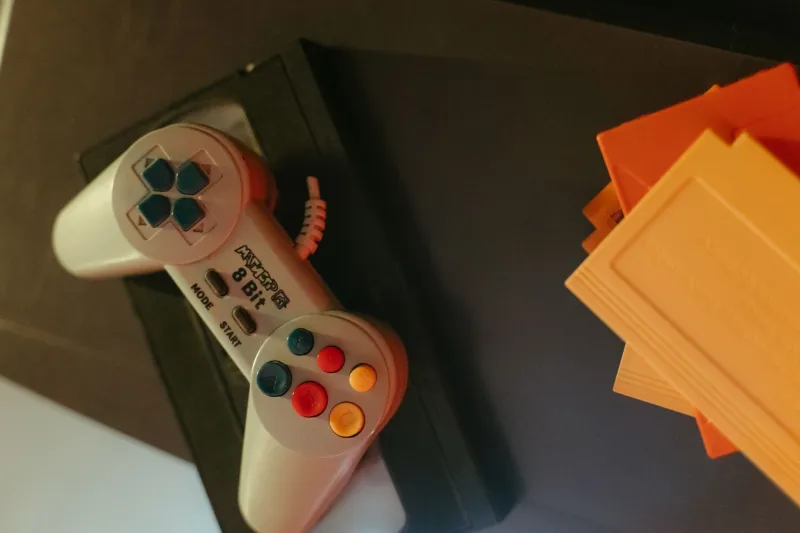
During the 1980s and into the early '90s, Peru's gaming scene operated almost entirely off the radar of the global industry. International titles were expensive and hard to come by, so a scrappy ecosystem of local programmers, small distributors, and informal tech shops filled the gap. Working on clone hardware — NES-compatible Famicom knockoffs that flooded South America under names like "Family Game" or "Super Boy" — Peruvian developers cranked out original titles and localized bootlegs that circulated through Lima's markets and eventually spread to cities like Arequipa, Trujillo, and Cusco.
These weren't polished productions. They were survival projects, coded by people who taught themselves assembly language from photocopied manuals and traded floppy disks at university computer labs. Many of the cartridges were pressed in tiny runs — sometimes fewer than a few hundred copies — and distributed through informal channels that left almost no paper trail. No official release dates. No company records. In many cases, no names at all on the packaging.
"That anonymity is actually part of what makes them so fascinating to collectors," says Marcus Delgado, a vintage game dealer based in Miami who specializes in Latin American retro titles. "You're holding something that someone made, someone played, and then it basically disappeared. Tracking one down feels like archaeology."
The Prices Are Getting Serious
Delgado has been sourcing Peruvian cartridges for about six years, mostly through connections with Peruvian expat communities in Florida and California. What started as a curiosity has turned into a legitimate revenue stream. A handful of titles — he declines to name them specifically, citing competitive reasons — have sold in private transactions for anywhere between $200 and over $1,000, depending on condition and provenance.
"Five years ago I couldn't give these away," he admits. "Now I have a waiting list."
The spike in interest tracks with broader trends in retro gaming collecting, where the well-known North American and Japanese libraries have been thoroughly catalogued and priced out of reach for casual buyers. Collectors looking for the next frontier are turning to regions that were historically overlooked — Brazil, Argentina, and increasingly Peru.
Online communities on Reddit's r/retrogaming and dedicated Discord servers have become hubs for sharing photos, discussing authenticity, and coordinating searches. A thread posted earlier this year asking about Peruvian Famicom clones and their original software generated hundreds of replies and connected collectors across the US, Spain, and Peru itself.
The Archivists Racing Against Time
Not everyone in this space is motivated by resale value. A loose network of digital archivists has been working for years to preserve Peruvian retro titles before the physical cartridges degrade beyond recovery. ROM dumps — digital copies of the game data — are shared through preservation-focused sites, giving researchers and enthusiasts access to titles that might exist in only a handful of physical copies worldwide.
Carolina Ríos, a Peruvian-American programmer living in Austin, Texas, got into this work almost by accident. She was helping her parents clean out a storage space in Lima during a visit and stumbled onto a box of old cartridges her uncle had kept. Curious, she started researching them and couldn't find any documentation online.
"I realized that if I didn't do something, this stuff was just going to disappear," she says. "These were games that real people made. Kids played them. And nobody knew they existed."
Ríos has since connected with a small group of Peruvian tech historians and volunteers who are systematically tracking down cartridges, dumping their ROMs, and — where possible — trying to identify the programmers who made them. It's painstaking work. Most of the original developers were never credited, and many have been difficult to locate decades later.
The Programmers Behind the Pixels
When names do surface, the stories are remarkable. One developer, now in his late 60s and living in Lima, reportedly coded an entire platform game by himself over the course of several months, working nights after his day job at a telecommunications company. He sold the rights for a flat fee to a small distributor and never saw royalties. He didn't even know the game had been preserved digitally until Ríos's group contacted him.
"He cried," she says simply. "He thought it was just gone."
These kinds of reunions — between creators and their long-lost work — are becoming a quiet but meaningful part of the preservation effort. For the US-based collectors driving prices up, they're also a reminder that behind every cartridge is a human story, not just a collectible.
What Makes a Peruvian Cart Authentic?
For newcomers to this niche, authenticity is a real concern. The same clone hardware ecosystem that produced original Peruvian games also made it easy to produce counterfeits, and not all sellers are scrupulous about distinguishing genuine period pieces from later reproductions.
Delgado recommends looking for specific manufacturing markers — the type of PCB (circuit board) inside the cartridge, the style of the label printing, and crucially, whether the game data matches known ROM dumps in preservation databases. "If someone's selling you something they can't verify against an archived ROM, be careful," he says.
Condition also matters enormously. Cartridges that survived decades in Lima's humid climate are often in rough shape, and collectors have to weigh the appeal of an untouched original against the practical reality of a cartridge that may not reliably read.
A Culture Finally Getting Its Credit
What's happening with Peruvian retro cartridges is bigger than a niche market quirk. It's part of a larger reckoning with whose gaming history gets told — and whose gets buried. For decades, the dominant narrative of video game history was written around Japan, the United States, and Western Europe. The informal, survival-mode creativity that flourished in places like Lima during the 8-bit era simply didn't fit that story.
Now it's being written in, one cartridge at a time.
"Peru had a gaming culture," Ríos says. "It just looked different. It was scrappier, it was local, it was made under constraints most developers today can't imagine. And it deserves to be remembered."
For collectors in the US willing to do the digging — haunting expat Facebook groups, reaching out to preservation communities, or just knowing the right person in the right Lima neighborhood — the treasure hunt is very much still on. The píxeles perdidos are out there. You just have to know where to look.